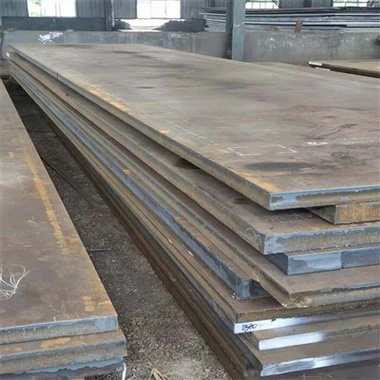


K D51 Steel Plate
Products Description Product Usage Scenario Analysis Tool - manufacturing Scenario : When manufacturing hand tools such as screwdrivers and wrenches, it is necessary to consider the situations where the tools frequently come into contact with, rub against other objects and apply torque during...
Kirjeldus
Tool - manufacturing Scenario: When manufacturing hand tools such as screwdrivers and wrenches, it is necessary to consider the situations where the tools frequently come into contact with, rub against other objects and apply torque during use. For these tools, a relatively high hardness is generally required to resist wear and deformation. For example, the hardness of an ordinary screwdriver tip is required to be between HRC40 - HRC50 so that the tip can maintain its shape and not be easily worn or damaged when tightening screws.
Mold - manufacturing Scenario: In the field of mold manufacturing, different types of molds have different hardness requirements. Injection molds need to withstand the high pressure and friction of plastic melts, and their surface hardness is usually required to reach HRC45 - HRC55. Die - casting molds, due to having to withstand higher pressure and temperature as well as the scouring of liquid metal, have a higher hardness requirement, generally between HRC50 - HRC60. Such hardness can ensure that the molds maintain dimensional accuracy during repeated use, reduce wear and deformation, and thus guarantee the quality of plastic products or die - cast parts.
: Different industries have their own hardness standard specifications. For example, the machinery - manufacturing industry usually refers to standards such as ISO and GB (Chinese National Standards) to determine the hardness requirements of parts. Take gear manufacturing as an example. According to the GB/T 10095 - 2018 standard, for involute cylindrical gears for general purposes, the tooth - surface hardness is required to be between HRC48 - HRC55. This is to ensure that the gears have good wear resistance and anti - fatigue performance during the power - transmission process.
|
KR/R D51high Strength Chemical Composition |
|||||||
|
C |
P |
S |
N |
||||
|
KR/R D51 |
0.20 |
0.55 |
1.70 |
0.030 |
0.030 |
- |
0.020 |
|
V |
|||||||
|
- |
- |
- |
- |
- |
- |
- |
|


: When determining the hardness - performance target, the balance between hardness and toughness must be considered. If only high hardness is pursued, the material may become brittle and prone to fracture when subjected to impact. For example, when manufacturing cutting tools, if the hardness is increased to above HRC65, although the wear resistance of the tool is excellent, chipping may occur when cutting harder materials or when subjected to unexpected impact. Therefore, it is necessary to reasonably adjust the hardness according to the possible impact situations that the product may encounter during actual use to ensure that the material has a certain hardness while maintaining sufficient toughness. Generally speaking, for tools or components that need to withstand a certain impact, the balance between hardness and toughness can be achieved by controlling the carbon content, adding alloy elements and appropriate heat - treatment processes.
: High - hardness materials bring some challenges during the machining process. For example, steel with too high hardness will accelerate tool wear during cutting, increasing the machining cost. Therefore, when determining the hardness target, the subsequent machining process should be considered. If the machining process is mainly cutting, the hardness target should be appropriately reduced, or the material should be pre - treated appropriately before machining, such as annealing treatment to reduce the hardness before machining. At the same time, the heat - treatment and other processes after machining to restore and increase the hardness should also be considered to meet the hardness requirements of the final product.
We analyze and compare the previous products and the current technical situation of our K D51 Steel Plate, and develop new technical specifications and processes.
Our customers trust us to deliver high-quality Cold-rolled Steel products on time and on budget.
We strictly implement the warm and thoughtful after-sales service, adhere to the development of good professional ethics.
We offer a wide range of Cold-rolled Steel products to meet diverse customer needs.
We adhere to the customer-centric and brand-oriented business philosophy, and continue to provide customers with reliable and excellent products and services.
Our Cold-rolled Steel products are known for their durability and reliability.
Kuum tags: k d51 steel plate, China k d51 steel plate suppliers, factory